


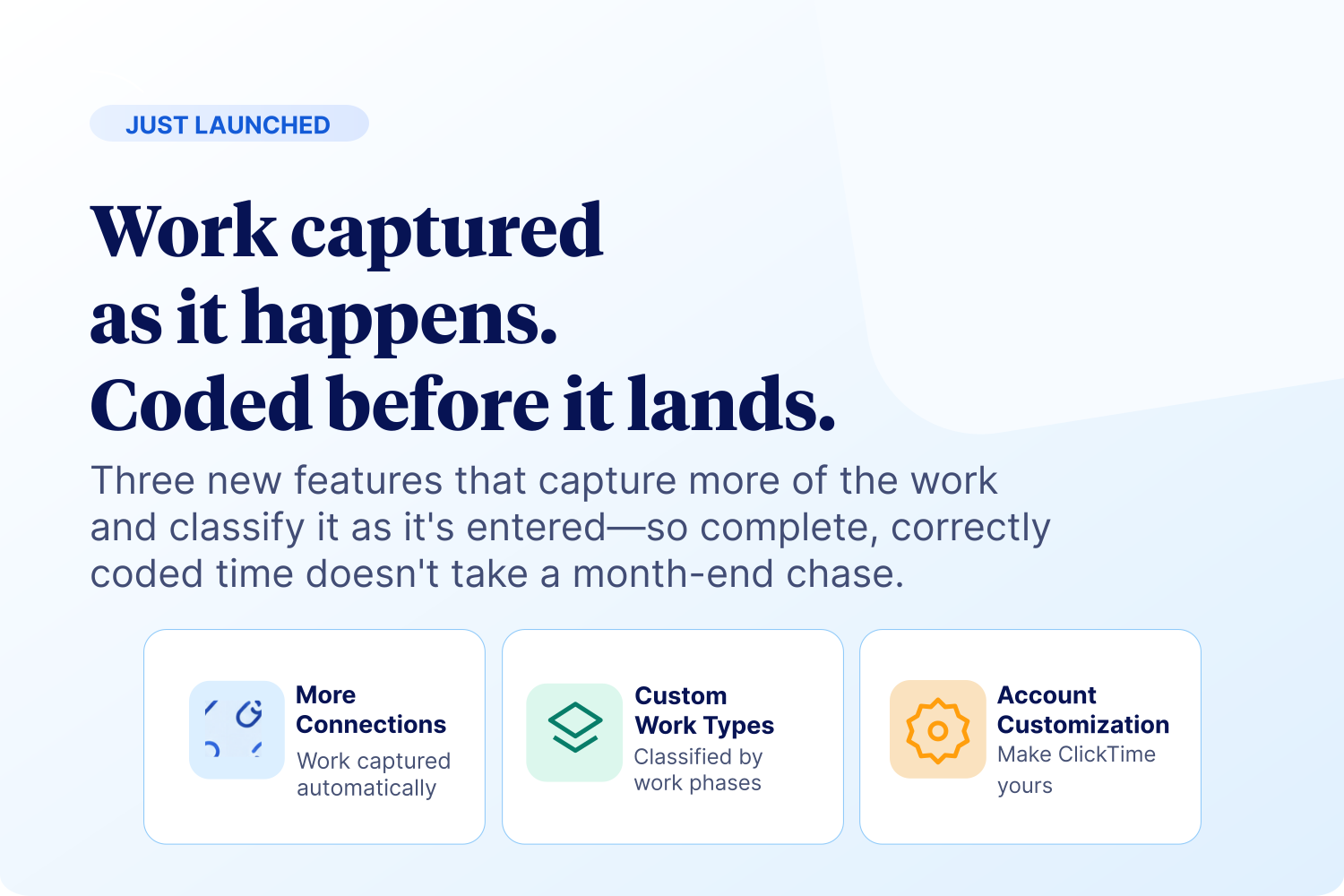
Labor data structured at the source: Work Types, Connections, and Account Customization
Work Types, expanded Connections, and account customization give finance more complete, better-structured labor data. Now on Team plan and above.
CapEx formula: How to calculate capital expenditure
Learn the CapEx formula to calculate capital expenditure from financial statements. Includes examples, CapEx vs OpEx differences, and impact on cash flow.
How to track employee time for grants at nonprofits
Learn how nonprofits can track employee time for grants, ensure 2 CFR 200 compliance, and create audit-ready records with effective time tracking software.
How to create a project budget that protects your margins
Learn how to create a project budget, track costs, and avoid overruns. A practical guide for project managers managing project profitability.
Grant management software for nonprofits: key features and benefits
Learn how grant management software helps nonprofits track funding, automate compliance workflows, and generate funder-ready reports.
How ClickTime AI maps work to timesheets
AI time mapping reads the work your team is already doing and turns it into categorized time entries and actionable outputs automatically. Here's exactly how it works with AI-powered technology.
What is inurement? Definition and nonprofit compliance guide
Learn how inurement threatens 501(c)(3) status, the difference from private benefit, and how to protect your nonprofit. See how ClickTime helps.

CapEx vs OpEx: capital expense and operating expense differences explained
Learn the key differences between CapEx and OpEx, including tax treatment, accounting, and when to use each for IT budgeting and financial planning.
Resource planning that works for every team
Four new capabilities that remove the biggest blockers to using ClickTime’s Resource Management—whether you manage client work, internal operations, or both.

Research and development tax credit: A complete guide
Learn how the R&D tax credit reduces your tax liability. See what qualifies, how to claim Form 6765, and why accurate time tracking protects your credits.

Time management tips: strategies, techniques, and skills for better productivity
Learn proven time management tips and strategies to boost productivity. Discover skills to prioritize tasks, meet deadlines, and reduce stress at work.
Best grant management software for nonprofits in 2026
Compare the best grant management software for nonprofits. See features, pricing, and how ClickTime delivers audit-ready records for grant compliance.

Engineering cost management: A guide for cost engineers and project control
Learn how engineering cost management helps finance teams control technical labor spend with proven cost estimation methods and project control strategies.