See the Real Cost of Your Projects

Track work in progress. Uncover hidden costs. And prevent inaccurate budget estimates.

Get a demo

Correcting the Planning Fallacy

Businesses tend to underestimate the amount of time it takes to complete projects. By doing so, they often miscalculate final costs, budgeting significantly less than what is needed. ClickTime ensures your team tracks every expense, so that you’ll know what each project truly costs. This way, your managers will plan and deliver projects on-time, on-budget, and within scope.

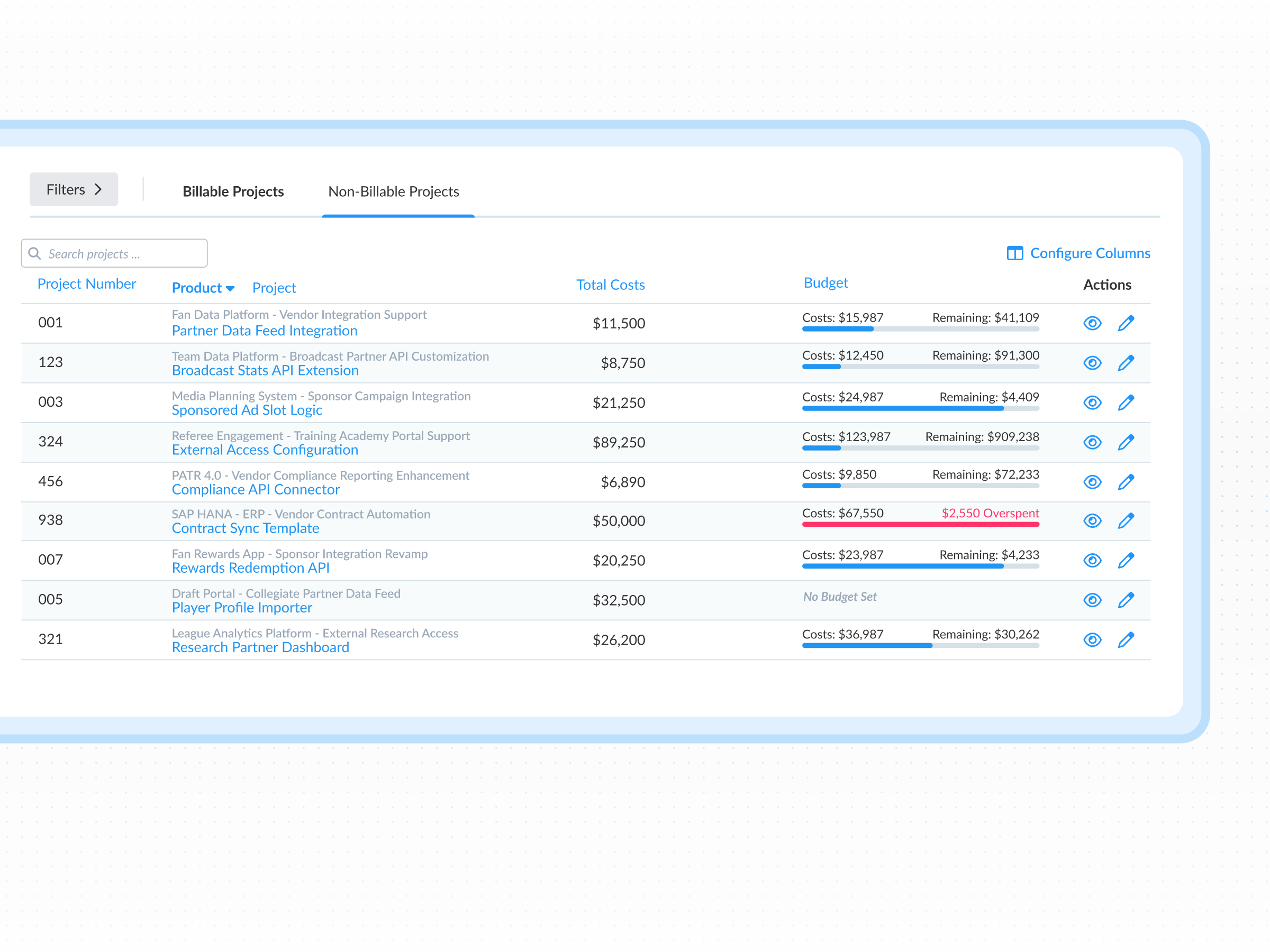
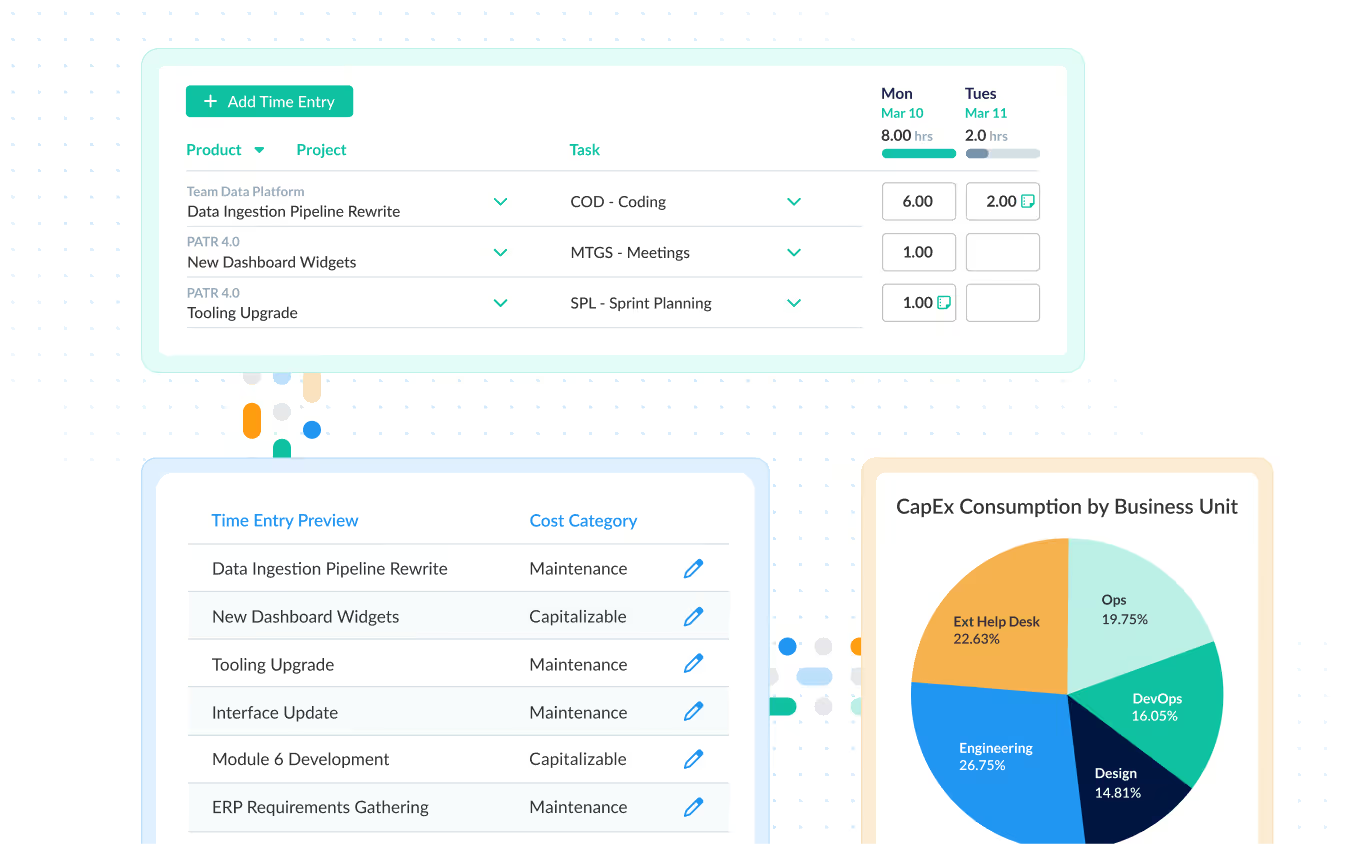
  • Uncover Hidden Costs: Most organizations don’t track every project expense. Often, hidden costs such as an executive’s time, internal meetings, and client correspondences go unrecorded. These hidden costs quickly add up, destroying profit margins and leaving leadership in the red and scratching their heads. With ClickTime, you’ll be able to track both billable and non-billable hours, manage overtime, and attribute every small task to its corresponding project.
  • Use Historical Cost Data to Build Better Estimates: Without accurate, complete, historical project data, managers are inclined to grossly underestimate the time needed to complete an initiative. ClickTime saves all past project data, providing 70+ prebuilt reports to help you uncover insights. Armed with this intel, both managers and new employees alike can see how past projects performed, increasing the likelihood that they make accurate estimates.

Track Budgets vs Actual Costs in Real Time

Even the best of plans are subject to unforeseen circumstances. And when challenges arise, project expenditures quickly balloon out of control. That’s why it’s important for your managers to monitor actual costs in real time – before those costs hit the books.

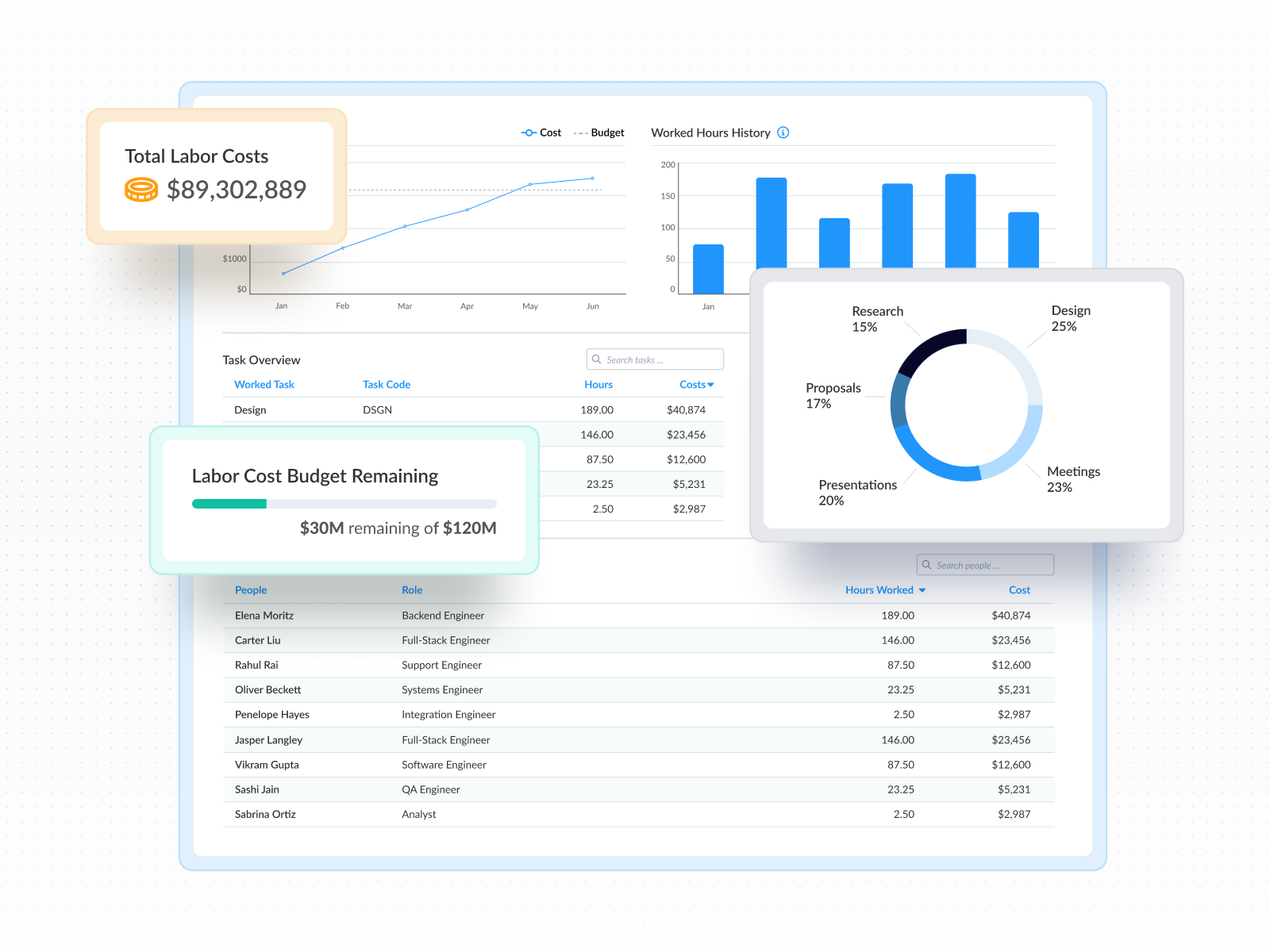
As employees work on a project, ClickTime deducts their hourly costs from that project’s overall budget. Our dashboards will then alert managers to budget issues in real time. This way, you won’t have to wait until the end of a pay period to discover overages.

  • View Upcoming Workloads to Prevent Delays and Overtime: Employees seldom work a full 40 hours per week on one project. Between internal meetings, vacations, illness, personal development, and additional team support, your employees’ effective utilization rate may hover closer to 75%. This means your managers must plan accordingly, understanding upcoming capacity before committing to project budgets and deadlines. By doing so, you’ll avoid costly overtime payments and project delays – both of which inflate your projects’ real cost.
  • Accurately Account for Fluctuating Cost Rates: The hourly cost rate of your salaried employees is constantly changing. The more hours they work in a given pay period, the less those hours cost your business. ClickTime uses employee salary data to automatically adjust cost rates in real time. This way, every hour worked correctly counts toward a project’s overall expenditures.

View Each Project’s Performance

Certain types of projects your organization undertakes are going to perform better than others. With ClickTime, you’ll be able to measure the impact of each project, spotting trends amongst the highest performers.

Armed with this data, you’ll begin to see which initiatives are worth pursuing, and which ones have a high opportunity cost. This way, you can double-down on the initiatives that move your organization forward.

Integrations

Purpose-built for labor cost data, not pieced together

View all integrations

Every entry includes approval workflows, complete change history, and instant reporting. Whether it's R&D tax credits, client billing disputes, or grant compliance, you have defensible records without scrambling through spreadsheets or Jira logs.

Smart Connect
Smart Connect
Smart Connect
Smart Connect
Smart Connect
Smart Connect
Smart Connect
Smart Connect

Solution FAQs

What is real cost?

Real cost is the total cost of both expenses and human labor.

What is the planning fallacy?

The planning fallacy is a phenomenon in which the amount of time needed to complete a future task is severely underestimated.

What is a cost rate?

A cost rate is the amount of money that an employee or contractor costs your business.

How do you calculate a project’s profit margins?

Profit margins are calculated by dividing net income over net revenue.

How do you calculate a salaried employee’s hourly cost rate?

Divide an employee’s total costs (gross wages + employer related expenses) by the number of hours they worked in a given time period.

What is a utilization rate?

Utilization is the amount of employees’ available time that’s used for productive, billable work, typically expressed as a percentage.

Stop losing visibility into your largest expense

Book a demo
Ask a question