

Time tracking software for engineering teams

Engineering hours drive revenue, R&D credits, and project budgets. ClickTime captures work from the tools engineers use and turns it into finance-ready data.

Get a demo

Recover billable hours

Capture the work engineers actually do—not just what they remember to log

Control labor cost budgets

Track engineering spend against budgets in real time so overruns surface early

Audit-ready R&D records

Document CapEx labor, R&D hours, and project costs with records that hold up under scrutiny

"With the help of ClickTime, we are able to document claims for R&D tax credits for the hours our U.S.-based engineers spend working on qualified activities."
Jerri Franklin
Program Administrator, Nidec

Engineers shouldn't spend their time logging time

  • Smart Match pulls engineers' digital footprint from Jira, GitHub, Calendars, Zoom, and other work tools—then matches hours to the categories finance cares about, like GL codes, CapEx, OpEx, and R&D
  • Optional AI matching suggests the right project and category for each block of work, so engineers confirm rather than reconstruct their week from memory
  • Works across your entire organization—not just engineering—so every team's hours feed the same finance-ready data set

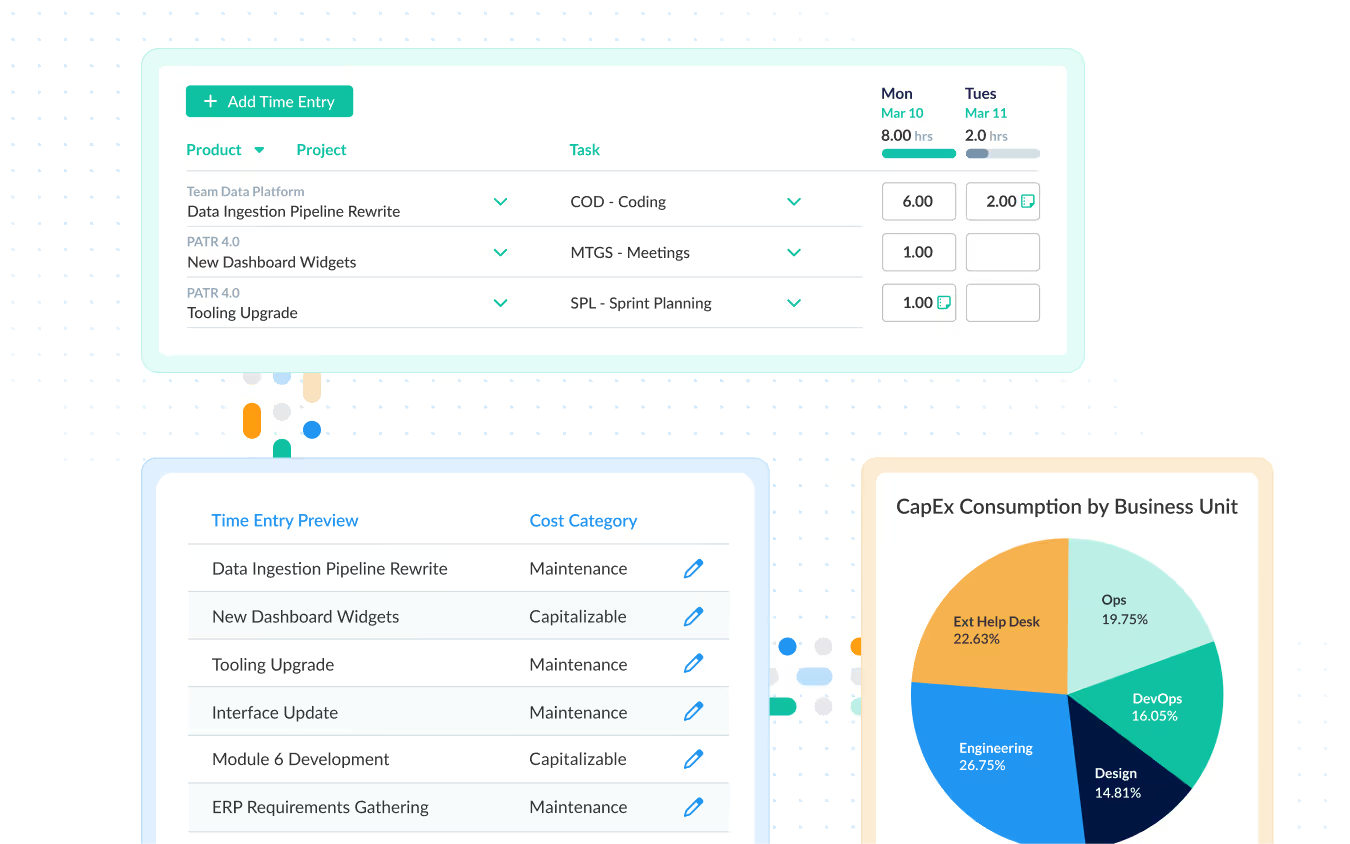
Track engineering labor costs against budget—before overruns become permanent

  • Set labor cost budgets by project, team, or cost center and track actual engineering spend against plan in real time—50% of finance leaders have experienced budget overruns from improper labor cost tracking
  • Separate billable from non-billable hours and classify CapEx vs. OpEx labor at the point of entry so revenue leakage and misallocated costs are visible before they compound
  • Compare estimated vs. actual project costs across engagements to improve scoping accuracy and protect profitability

Turn engineering hours into defensible financial records

  • Categorize R&D labor at the moment of entry so eligible hours are documented for tax credits and software capitalization—nearly 25% of organizations have lost R&D tax credits due to inadequate documentation
  • Built-in approval workflows and audit trails create the defensible records auditors and tax advisors require—without retroactive data cleanup
  • Export finance-ready data directly to your accounting system or ERP, mapped to your GL structure through pre-built integrations
Integrations

Purpose-built for labor cost data, not pieced together

View all integrations

Every entry includes approval workflows, complete change history, and instant reporting. Whether it's R&D tax credits, client billing disputes, or grant compliance, you have defensible records without scrambling through spreadsheets or Jira logs.

Smart Match
Smart Match
Smart Match
Smart Match
Smart Match
Smart Match

Solution FAQs

What is time tracking software for engineers?

Time tracking software for engineers captures how engineering teams spend their hours across projects, phases, and task types. Unlike generic time trackers, ClickTime is built for finance-ready output—every hour is tied to meaningful categories like billable work, R&D, CapEx, and OpEx at the moment of entry. This gives finance and operations leaders the accurate data they need for billing, project budgeting, and labor cost reporting.

How can time tracking software improve project profitability for engineering firms?

Engineering firms lose revenue when billable hours go unrecorded or when project costs exceed estimates without early warning. Time tracking software like ClickTime gives project managers and finance leaders real-time visibility into hours and costs against budget—so they can spot overruns early and recover billable time before invoices go out. Only 47% of organizations can forecast future project costs effectively, making accurate time data a competitive advantage.

Can time tracking software integrate with tools engineers already use?

Yes. ClickTime's Smart Match feature pulls engineers' digital footprint from tools like Jira, GitHub, Calendars, and Zoom, then matches that activity to the right projects and cost categories. This reduces manual time entry—one of the biggest sources of friction and inaccuracy in engineering firms—and works across the entire organization, not just engineering teams.

What features should engineering firms look for in time tracking software?

Engineering firms should prioritize time tracking software that separates billable from non-billable hours at the point of entry, integrates with project management tools like Jira, and produces finance-ready reports without manual data cleanup. Look for built-in approval workflows, audit trails for R&D documentation, and the ability to map time data directly to your GL structure or ERP for accurate billing and cost reporting.

What features should engineering teams look for in time tracking software?

Engineering teams need time tracking that captures hours without disrupting development workflows. Look for integrations with the tools engineers already use—Jira, GitHub, Calendars—so time data is captured from their existing digital footprint rather than manual entry. The software should also classify hours into finance-relevant categories like CapEx, OpEx, and R&D at the point of entry, and provide approval workflows that create audit-ready records.

How does time tracking software help with R&D tax credits for engineering teams?

R&D tax credits under IRS Section 41 require detailed documentation of eligible labor hours. Time tracking software that categorizes R&D work at the moment of entry—rather than through retroactive reconstruction—creates the defensible records auditors require. Nearly 25% of organizations have lost R&D tax credits due to inadequate documentation, making real-time classification critical.

How can time tracking improve project profitability for engineering firms?

Engineering firms lose margin when billable hours go unrecorded or project costs exceed estimates without early warning. Time tracking software that separates billable from non-billable hours at the point of entry makes revenue leakage visible before invoices go out. Real-time budget tracking lets project managers spot overruns early and adjust staffing or scope before profitability erodes.

What is the difference between traditional and automated time tracking for engineers?

Traditional time tracking requires engineers to manually log hours—often days after the work was done—leading to inaccurate records and missing billable time. Automated time tracking like ClickTime's Smart Match pulls activity data from tools engineers already use (Jira, GitHub, Calendars, Zoom) and matches those hours to finance categories. Engineers confirm pre-populated entries rather than reconstructing their week from memory.

Stop losing visibility into your largest expense

Book a demo
Ask a question