Your time tracker stopped being reliable. Ours hasn't and it shows you whether the work was worth it.

Harvest works until it doesn't—project limits, surprise renewals, and no real view of profitability. ClickTime is built for teams that have outgrown it: unlimited projects, margin visibility in real time, and pricing that doesn't change after you sign.

Get a Demo
How it Works

When time tracking starts creating business risk

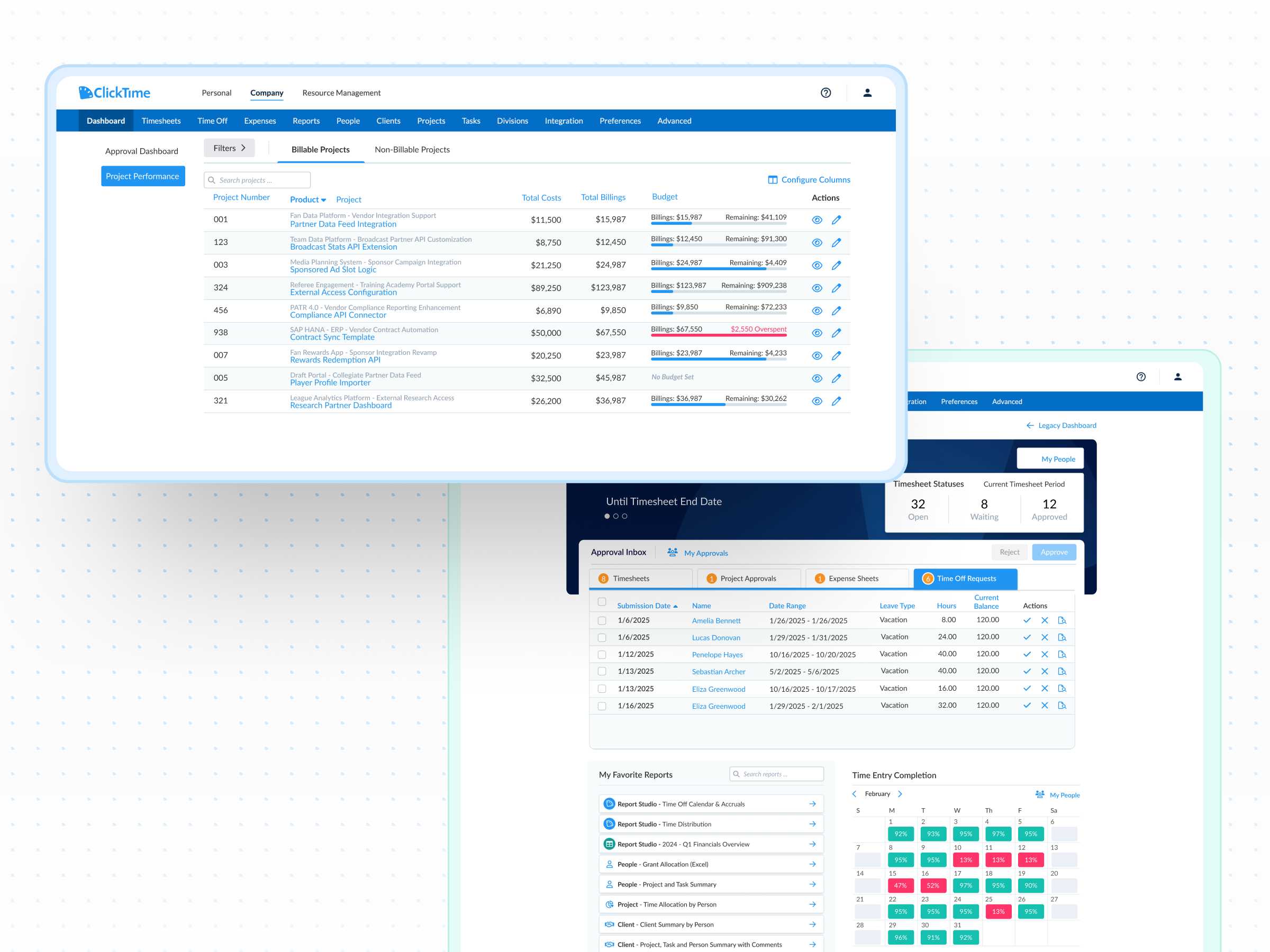
ClickTime unifies time, cost, and capacity in real time so leaders can manage profitability while work is happening, not after the close.

20% revenue recovered

Billing targets on the timesheet

Instead of reviewing time tracking and billing data separately, ClickTime brings both into the same workflow — so nothing gets lost between systems.

Overruns caught early

Real-time over-servicing alerts

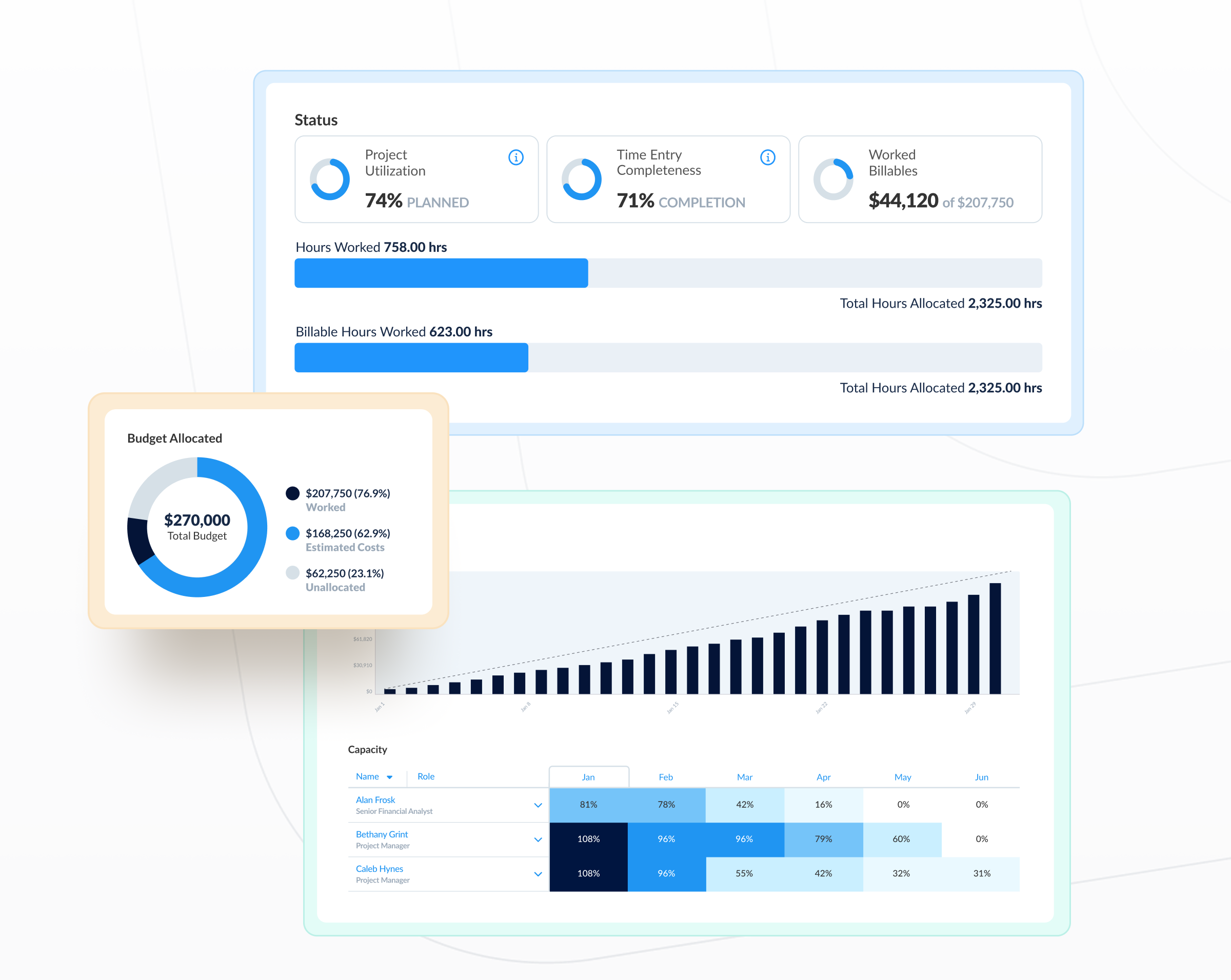
Most platforms show you what already happened. Real-time visibility highlights project risk early — so managers can act before margins are impacted.

Days faster to invoice

No reconciliation scramble

Instead of exporting and reconciling between systems, approved time is ready to reconcile in your ERP and accounting system

See profitability before month-end

If your team tracks time in one place and managers review budgets somewhere else, revenue leaks in the gap. ClickTime brings billing targets, approvals, and cost context into the same workflow — so nothing gets lost between systems.

  • Billing targets visible on the timesheet, not buried in reports
  • Billable vs. non-billable tracked at the task level
  • Capture the revenue you’re already earning
  • Automated reminders close the loop

Catch over-servicing before it shows up on the P&L

Most platforms show you what happened last month. ClickTime highlights project risk in real time — so managers can act before margin erosion, not after the invoice is out.

  • Alerts before overruns become write-offs
  • Real-time burn vs. budget, not end-of-month reports
  • True cost rates, not just billable rates

Make client commitments you can actually keep

Planning without real cost and time-off context isn't capacity — it's just scheduling. ClickTime shows availability with financial constraints built in, so forecasts reflect reality instead of best-case assumptions.

  • Capacity includes PTO and real utilization
  • Planned vs. actual side by side
  • Inputs to hiring decisions tied to actual team workloads

Built for teams that have outgrown basic time tracking

See how ClickTime compares to Harvest for teams that need real-time visibility into labor cost, capacity, and margins.

Header cell
ClickTime
Harvest
Billable utilization targets
Built into dashboards & timesheets
Retroactive only
Utilization visible to employees
Yes
No
Timesheets reflect allocations
Yes
No
Overtime tracking
Configurable
Workarounds
Planning granularity
Monthly, project, client, role
Weekly only
Blended cost rates
Yes
Limited
Capacity heatmap
Yes
No
Budgets visible during planning
Yes
No
Long-term profit analysis
Yes
Manual

Switching doesn't have to be painful

Most teams are fully operational within weeks, with their data and workflows intact.

Dedicated onboarding team

A dedicated onboarding manager maps your existing workflow before migration begins — no guesswork, no gaps.

Historical data import support

Your time entries, clients, and projects come with you. We handle the transfer so your records stay intact.

Existing projects and clients preserved

Reporting continuity maintained from day one. No rebuilding your project structure from scratch.

Weeks, not months

Typical implementation is 1–2 weeks. Most teams are live before their next billing cycle.

FAQs

Common questions

How is ClickTime different from Harvest?

Harvest separates time tracking from planning and offers limited reporting. ClickTime unifies time, cost, and capacity in one system so you don’t have to choose between project detail and financial visibility.

When do teams typically outgrow Harvest?

Teams usually outgrow basic time tracking when finance or operations starts asking questions that hours alone can’t answer—like whether labor is being capitalized correctly, if there’s real capacity for new work, or why margins slipped on a project. That’s when unified cost and capacity visibility becomes essential.

Is this only for large firms?

It’s designed for growing professional services teams that manage multiple clients, complex budgets, and evolving capacity needs. Many customers start small, then adopt a more connected system when financial visibility becomes critical.

Stop losing visibility into your largest expense

Book a demo
Ask a question

Built for teams that have outgrown basic time tracking

See how ClickTime compares to Harvest for teams that need real-time visibility into labor cost, capacity, and margins.